Century Stand Mastery: Right-Hand Rule & Big-Leg Sandbagging
Objective: Set any 20" or 40" C-Stand safely under heavy arms, flags, and lights without self-loosening failure.
📐 Governing Code / Formula: Big Leg Forward + Clockwise Knuckle (Torque T tightens right-hand side)
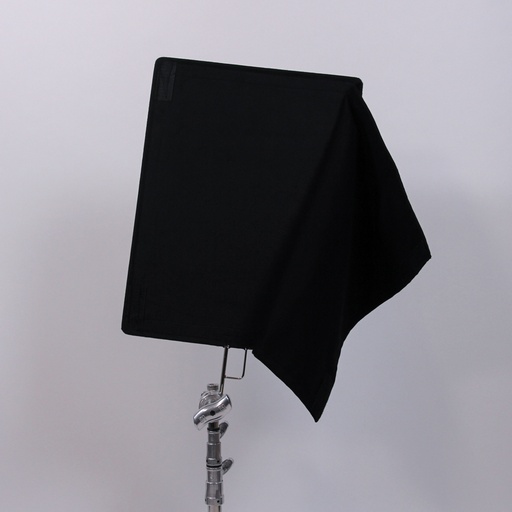
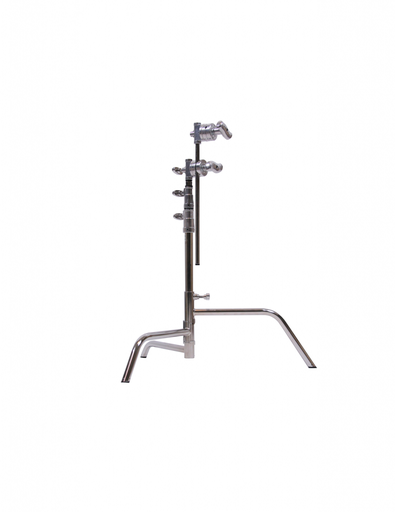
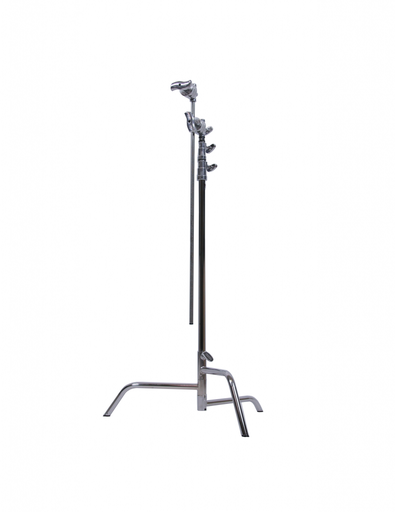
Big-Leg Orientation: Point the tallest top leg directly under the overhanging load (gobo arm / floppy).
Right-Hand Rule: Orient the 2.5" grip head knuckle to the viewer's RIGHT when looking down the arm toward the payload so gravity pulls clockwise—TIGHTENING the T-handle instead of unscrewing it.
Saddle Sandbagging: Drape sandbags over the TOP/tall leg so 100% of bag weight pulls DOWN on the leg—never let the sandbag touch the floor.
Norms ASTM A513 Type 5 DOM steel risers avoid collar denting that plagues thin ERW budget stands.
🎬 4C/ID On-Set Worked Scenario: Situation: Rigging a 24×36" Flag 9 ft high on a 40" C-Stand over an actor's eyeline. -> Set Action: Aim longest Big Leg directly under load, mount knuckle to your right so gravity pulls clockwise, drape 25 lb Saddle bag cleanly off floor.
Tallest Base Leg
Aimed toward overhanging payload
Knuckle Position
On right side looking toward arm tip (Tightens clockwise)
Sandbag Contact
Zero floor contact (full deadweight on leg)
Pro Set Tip: Never pick up a C-Stand by its horizontal gobo arm or leave knuckle handles pointed into walkway eye height.
Common Rookie Mistake: Rigging a floppy to the left side of the knuckle (counter-clockwise torque unscrews the clutch discs mid-take) and dropping the sandbag on the small low leg touching the floor.
⚡ Quick On-Set Recall Check (+25 XP · Auto-Verifies Module)
As you face a C-Stand T-handle, which way must the cantilevered gobo arm extend so gravity pulls the clutch TIGHTER?
Shaping Light: Flags, Floppies, Color-Coded Nets & Negative Fill
Objective: Understand every studio modifier by name, size, color code, and stop-loss behavior.
📐 Governing Code / Formula: Modifiers: Single Net -0.5 EV · Double Net -1.15 EV · 1/2 Grid -1.0 EV · Full -1.75 EV
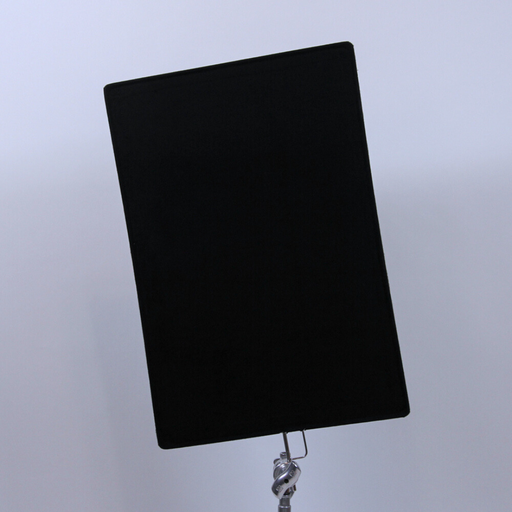
Cutters & Solids: 18×24, 24×36 ('2-by-3'), 4×4 Solids, 4×4 Bottom/Side Floppies (open to 4×8) block spill completely and carve Negative Fill contrast.
Color-Coded Bobbinet Nets: Lavender = -0.30 EV (~1/3 stop), Green Single = -0.55 EV (~1/2 stop), Red Double = -1.15 EV (~1+ stop). Nets cut intensity WITHOUT softening hard shadows.
Celo / Wood Cucoloris ('Cookie') & Dots/Fingers: Break up flat background light or flag small tabletop reflections.
Order of Setup: Mount grip head and C-Stand near the edge first, slide the flag pin into the V-jaw cleanly so it cannot pivot downward into talent.
🎬 4C/ID On-Set Worked Scenario: Situation: DP wants -1 stop knocked off a hot window glare outdoors in 12 mph breeze without blurring shadows. -> Selection: Double Net (`-1.15 EV`) over solid silk so air passes through bobbinet mesh and light retains crisp specular edge.
Green Single Net
~ -0.55 EV (1/2 stop), retains hard shadow
Red Double Net
~ -1.15 EV (1+ stop), retains hard shadow
4x4 Floppy Solid
Unclips to 4x8 wall of Negative Fill
Pro Set Tip: Call out size + fabric accurately: 'Bring a 2x3 Double and a 4x4 Solid floppy, please!'
Common Rookie Mistake: Confusing a Single Net (-1/2 stop intensity, crisp shadow) with a Silk (-1.6 stops + soft scattering).
⚡ Quick On-Set Recall Check (+25 XP · Auto-Verifies Module)
Your Gaffer asks to trim soft exposure evenly outdoors in wind WITHOUT softening crisp shadows. Choose net vs silk:
Overhead Frames (6×6–20×20), Cinema Knots & Wind Ballast Math
Objective: Build safe butterfly/overhead frames outdoors, tension textiles wrinkle-free, and guy rigs under Actsafe #38d.
📐 Governing Code / Formula: Rayleigh Drag: F = 0.5 · ρ · v² · Cd · A (20 mph Gusts ~ 4× Force of 10 mph)
Aerodynamic Force Scales With Velocity Squared (F = 0.5 * rho * v^2 * C_d * A): A 4×4 solid catches ~13 lbf at 15 mph and ~35 lbf at 25 mph; a 12×12 solid exceeds 320 lbf at 25 mph.
Three Mandatory Knots: Bowline (non-slip end loop), Clove Hitch + Two Half Hitches (anchoring stands), Trucker's Hitch (~2:1–3:1 guy tension to stakes/ballast).
Porous Fabrics Cut Wind Drag: Use Silent Grid Cloth or Ultrabounce with spill vents/drop-nets rather than sealed solids when gusts rise; lower & break down overheads before gusts exceed safe limits.
Guy Lines & High Rollers: Guy at ~45° in 3–4 directions using #8/#10/#12 solid-braid low-stretch polyester sash cord; never fly hardware solely on rope.
🎬 4C/ID On-Set Worked Scenario: Situation: Staging an 8×8 Bleached Muslin outdoor bounce as afternoon wind reaches 18 mph (`Actsafe #38d` alert). -> Set Action: Twin High Roller stands weighted with >= 70 lbs each, dual high/low low-stretch `#8` Sash Trucker's Hitches to anchor stakes/truck wheels.
Bowline
High-strength end loop that unties cleanly after load
Clove + 2 Half Hitches
Secure tie-off around stand column or ear
Trucker's Hitch
2:1–3:1 mechanical advantage tensioning line
Pro Set Tip: Wrap excess tails neatly cleanly off walkways and slap high-visibility flagging tape on outdoor ground guy lines.
Common Rookie Mistake: Cranking a Trucker's Hitch so tight on a high roller top riser that it pulls the stand over instead of sharing tension radially.
⚡ Quick On-Set Recall Check (+25 XP · Auto-Verifies Module)
At 25 mph outdoor wind gusts, Actsafe #38d shows an angled 4x4 Solid Flag generates ~35 lbf horizontal push. How much saddle sandbag ballast do you add?
Cribbing Stack Order: Full/Half/Quarter Apple Boxes + Pancakes topped by Opposed 9.46° Hardwood Wedges (never rock single wedges).
Dance Floors: Smooth 3/4" Birch Ply topped by smooth Masonite (Slick Side Up) with beveled edge strips on carpet/uneven stone for skate-wheel dollies.
Menace Arms: Use 1-1/2" Schedule 40 aluminum/steel pipe with triangular ratcheting strap bracing from mast top and verified rear counterweight (M_counter >= M_front).
🎬 4C/ID On-Set Worked Scenario: Situation: Levelling 16 ft straight aluminum dolly track across a 3.5-inch driveway crown, plus extending a 50 lb light 6 ft front on a Menace Arm (`4 ft` rear tail). -> Calculation: Opposed `9.46°` cedar wedges every tie (`24.5"` gauge); Menace Arm rear tie needs `>= 75 lbs` (`50 × 6 / 4`) + 1.5× safety ballast margin.
Dolly Track Gauge
24.5 in (62.2 cm) rail centers
Wedge Pitch
Opposed 9.46° pairs directly under sleepers
Menace Arm Torque
Rear Counter Moment >= Front Payload Moment
Pro Set Tip: Walk the track rail seam with a fingernail and wipe grit off skateboard wheels every 3 takes—bumps ruin slow push-ins.
Common Rookie Mistake: Placing a wedge stack under the middle of a rail hollow span, causing the track to flex downward under a 500+ lb loaded dolly.
⚡ Quick On-Set Recall Check (+25 XP · Auto-Verifies Module)
How wide is standard cinema steel/aluminum precision dolly track gauge center-to-center, and how are rail ties shimmed?
INTERACTIVE 3D HARDWARE & SAFETY INSPECTOR
Inspect Norms CAD Assemblies & Spot the Set Hazard
Switch between Norms engineering assemblies (interactive 3D CAD when WebGL is available, or interactive 2D rigging schematic) and solve all 6 set hazard scenarios below.
Active Assembly: Norms C-Stand (Right-Hand & Big-Leg Rule)
⚠️ Spot the Hazard Challenge (1/6): Loading...
⚖️ C-Stand Overhang Cantilever Torque Simulator
🧰 Build Your Day-1 Starter Belt & Tool Checklist
Verify every essential tool before stepping onto set for this department:
FINAL TRACK CERTIFICATION EXAM • 80% PASS (4/5)
Scenario Assessment & Official Certificate Generator
NORMS STUDIO EQUIPMENT • HOLLYWOOD, CALIFORNIA, USA • EST. 1962
GRIPEDIA ACADEMY CERTIFICATE OF COMPLETION
This certifies that
Crew Member
has successfully mastered the practical rigging physics, safety standards, and set protocols for:
The Grip Academy: Zero to Key Grip (C-Stands, Modifiers, Dollies & Loadouts)
Verification ID: NORMS-ACAD • Standards: Uva's Grip Book / Actsafe BC #38d / Norms DOM Engineering • normsstudio.equipment/gripedia/academy