GRIPEDIA FIELD GUIDE • Electric, Power & Control • HOLLYWOOD, CALIFORNIA, USA
Generator Grounding, Crystal Sync 60Hz & Wet-Set GFCI Safety
8-foot earth electrode bonding (≤25 Ohms), Crystal Sync 60.00 Hz ±0.05% anti-flicker governors, pure sine wave inverters, and 4–6 mA Class A GFCIs.
Direct Field Answer: As autonomous Separately Derived Systems under NEC Article 250 & 530, film generators above 5kW require single-point Neutral-Ground (N-G) bonding to an 8-foot copper-clad ground rod ($\le 25\ \Omega$) or building steel, electronic Crystal Sync governors locking 60.00 Hz ($\pm 0.05\%$) against shutter banding, and Class A GFCIs (4–6 mA trip) on every wet exterior circuit.
1. Studio Power Sources & Harmonic / Acoustic Limits
| Power Platform | Output Profile | Acoustic Noise @ 50 ft | Waveform / Crystal Sync | Typical Deployment |
|---|---|---|---|---|
| Movie-Quiet Tow-Plant (500A–1400A) | 120/208V 3Φ Wye or 240V Zig-Zag | 48–52 dBA (Tier 4F SCR/DPF) | Electronic Governor 60.00 Hz ±0.05% | Studio features, multi-18K HMIs, night exteriors |
| Portable Film Inverter (Honda EU Series) | 120V / 240V Clean AC | 52–59 dBA (Eco throttle) | Pure Sine Wave (<2.5% THD) | Location small-LED rigs, camera carts, craft service |
| Contractor Open-Frame Genny | Modified Square / Coarse Throttle | 70+ dBA | Unregulated Drift (≥1.0 Hz swing) | Avoid near sound or sensitive cinema LED drivers |
2. Diagram: Separately Derived N-G Bond & Wet-Set GFCI Chain
3. Wet-Set & Bonding Safety Protocol (CSATF Bulletin #23)
- Bond Neutral-to-Ground Once Only: Only bond Neutral (White) and Ground (Green) at the primary source generator panel—never inside downstream spider boxes, which induces lethal return currents along metal Bates jackets and aluminum lamp stands.
- Elevate Every Connection: Place all Cam-Lok T-junctions, Bates splitters, and stinger plugs atop insulated milk crates, rubber mats, or Half Apple Boxes during rain-tower or wet-street shoots—water pooling around pins bypasses basic splash boots.
- Never Defeat Ground Pins: Zero 3-to-2 "cheater" lifts on stage power—any tripped GFCI indicates real moisture leakage that demands tracing before filming resumes.
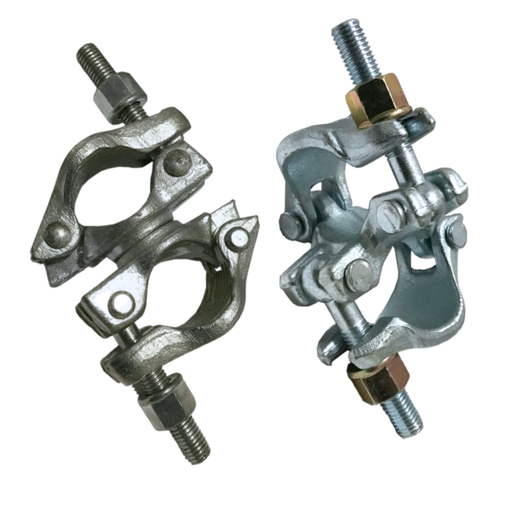
Hardware Engineered for This Rigging Standard

Frequently Asked Set Questions
Q: When is an earth ground rod required for a portable film generator?
Per NEC Article 250 and CSATF Bulletin 23, portable generators exceeding 5kW serving exterior distro panels must connect to a 5/8-inch copper-clad rod driven 8 feet into earth (impedance <= 25 Ohms) or bond to verified structural building steel.
Q: Why must a film generator hold 60.00 Hz within +/- 0.05 percent?
At 24 fps with a 180-degree shutter (1/48s exposure), each digital or film frame integrates precisely 2.5 cycles of 60Hz AC power. Frequency drift above 0.2 Hz creates rolling horizontal luminance bars on AC HMIs and non-regulated lamps.
Q: What GFCI trip sensitivity protects wet-set 120V lighting lines?
Mandatory Class A Ground Fault Circuit Interrupters trip in milliseconds at 4 to 6 milliamps differential fault current for all wet stages, rain towers, or exterior lines within 20 feet of standing water.
VERIFIED IN HOLLYWOOD, CALIFORNIA, USA • EST. 1962
Generator Grounding, Crystal Sync 60Hz & Wet-Set GFCI Safety