GRIPEDIA FIELD GUIDE • Light Modifiers, Textiles & Optics • HOLLYWOOD, CALIFORNIA, USA
Camera Assistant Optics: ND/IRND Filtration, Polarizers, Diopters & Slating
Logarithmic Optical Density transmittance (T = 10^-D), IRND > 700nm infrared contamination prevention, Rota-Pola stop loss, +1/+2 diopter focus scaling, two-hand 'Got it!' lens swaps, and ST 12-1 slate discipline.
Direct Field Answer: Standard cinema filtration follows T = 10-D where every
0.3 optical density equals -1.0 exposure stop. Switch to IRND / FSND filters at ND 1.2 or denser to reject near-infrared wavelengths (> 700 nm), verbally lock every prime swap with "Got it!", and re-jam SMPTE ST 12-1 smart slates identically to camera frame rate at call and post-lunch.1. Optical Neutral Density (ND) & Transmission Physics
Cinema neutral density glass (4×5.65 Panavision/PV or 6×6 Studio) controls depth of field without changing shutter angle or iris blade diffraction. Optical density (D) converts directly to transmitted luminance percentage (T) and stop loss (ΔEV):
T = 10-D, • ΔEV = frac{D}{log10(2)} ≈ (D) / (0.30103)
| Filter Designation | Optical Density (D) | Visible Transmission (T) | Exposure Attenuation | Field Application Window |
|---|---|---|---|---|
| ND 0.3 | 0.3 | 50.1% | -1.0 Stop | Stepping fast primes from T2.8 down to T2.0 outdoors |
| ND 0.6 | 0.6 | 25.1% | -2.0 Stops | Open overcast exteriors and doorway transitions |
| ND 0.9 | 0.9 | 12.6% | -3.0 Stops | Heavy shade, open window keys (IRND transition boundary) |
| ND 1.2 | 1.2 | 6.3% | -4.0 Stops | Midday exterior (T2.0 @ 800 ASA -> mandatory IRND / FSND) |
| ND 1.5 / 1.8 / 2.1 | 1.5–2.1 | 3.2%–0.8% | -5.0 to -7.0 Stops | Reflective sand, snow, water exteriors + bright anamorphic T-stops |
2. IR Pollution, Anti-Reflection Tilting, Polarizers & Diopters
- Infrared Contamination Control (
> 700 nm): Traditional dyed polyester/glass ND filters attenuate visible wavelengths while passing near-infrared energy (700–1000 nm). Digital cinema sensors without strong internal hot mirrors render black tuxedos, dark hair, and foliage reddish-brown aboveND 0.9unless IRND (absorptive IR layer) or FSND (broadband multi-coated attenuation) glass is slotted cleanly into Stage 1. - Double-Bounce Filter Flare Elimination: When bright practicals, car headlights, or harsh backlights hit stacked matte box trays, reflections bounce repeatedly between rear filter surfaces and convex front elements. Use Grip-mounted French Flags / Eyebrows on
1/4"–3/8"rods, drop black paper hard mattes over the matte box frame, and enable3°–5°optical tray tilt trays so specular ghosting deflects downward out of lens view. - Linear / Circular & Rota-Pola Mechanics: Circular and Rota-Pola gears rotate linearly inside fixed
4×5.65trays without rotating the whole matte box, slicing sky scatter and cutting specular car/window glare by-1.5to-2.0stops when oriented orthogonal to glare polarization. Verify optical path compatibility on beam-splitter 3D or prism-metering finder housings before mounting linear polas. - Split & Full Close-Focus Diopters (
0 EVLoss): Positive close-up lenses screw or drop in front of master primes to pull close-focus range inward (f_max = 1000 mm / Power). A+1diopter sets infinity focus at1.0 m(39.4 in), and a+2pulls infinity inward to0.50 m(19.7 in), preserving transmission brightness (0stop compensation) while demanding dedicated1st AChard tape marks.
3. Two-Hand Lens Safety, Mitchell Tie-Downs & Slating SOP
- Mandatory
"Got It!"Two-Handed Lens Swap Protocol: Never release hands from a prime or zoom lens during barrel swaps until the receiving assistant grips the housing solidly and speaks "Got it!" clearly aloud. Clean optical glass exclusively with clean lens tissue + approved solution from center outward; never drag dry shop cloth across multi-coated glass. - Mitchell Bases, Fluid Dovetails & Apple Boxes: Before unfastening bottom
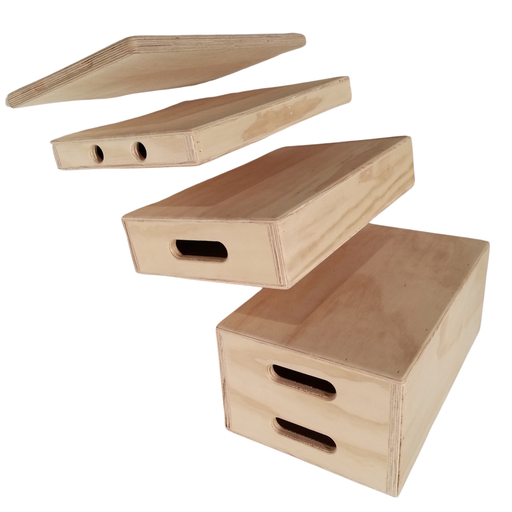
Mitchell castle nutsor sliding camera quick-release dovetails across a balanced fluid head, speak "Hands on camera!" and confirm balanced fore/aft neutral center of gravity with pan/tilt locks engaged. KeepFull,Half,Quarter, andPancakeMaple/Baltic Birch Apple Boxes staged directly alongside camera carts for quick operator step-ups. - Smart Slate & MOS Protocol (
SMPTE ST 12-1): Confirm production frame rate parity (23.976vs24.000fps) across Camera, Sound Mixer, and Smart Slate; mismatched0.1%NTSC pull-down drifts3.6 seconds(~86 frames) per hour. Frame sticks cleanly at slate focus without blocking clapper digits; hold fingers flat across stationary closed sticks on MOS (silent) takes; invert the slate upside-down cleanly on "Tail Slate!" at cut.
GRIPEDIA ACADEMY • 100% FREE INTERACTIVE LAB
Practice This Standard & Earn Certification: Track 04: Camera, Optics & Dolly Rigging
Hardware Engineered for This Rigging Standard
Frequently Asked Set Questions
Q: When must a 1st AC switch from standard optical ND glass to IRND or Full-Spectrum ND (FSND)?
Above ND 0.9 (-3 stops), standard absorbed dyes still pass near-infrared light above 700nm, causing dark fabrics, synthetics, and hair to turn muddy brown or magenta on CMOS/CCD sensors. Always use certified IRND or dichroic FSND glass at ND 1.2 (-4 stops) and stronger.
Q: How much distance does a +1 diopter shorten maximum infinity focus distance?
Under f_max = 1000mm / P_diopter, a +1 diopter pulls infinity focus inward to exactly 1.0 meter (39.37 inches), a +2 pulls infinity inward to 0.50 meters (19.7 inches), and zero exposure stop compensation is required.
Q: Why must a 2nd AC re-jam smart slates after lunch?
Mismatching 23.976 fps vs 24.000 fps clocks introduces 3.6 seconds (~86 frames) of cumulative audio/video drift every hour. Re-jamming camera body and smart slate against master timecode at morning call and post-lunch prevents lip-sync failures in editorial.
VERIFIED REFERENCES & GOVERNING STANDARDS
Evidence Tier: T1 Standards + T3 Canonical Camera Manual | Last Audited: 2026-11-22
VERIFIED IN HOLLYWOOD, CALIFORNIA, USA • EST. 1962
Camera Assistant Optics: ND/IRND Filtration, Polarizers, Diopters & Slating